Latest Blog Posts


May 25
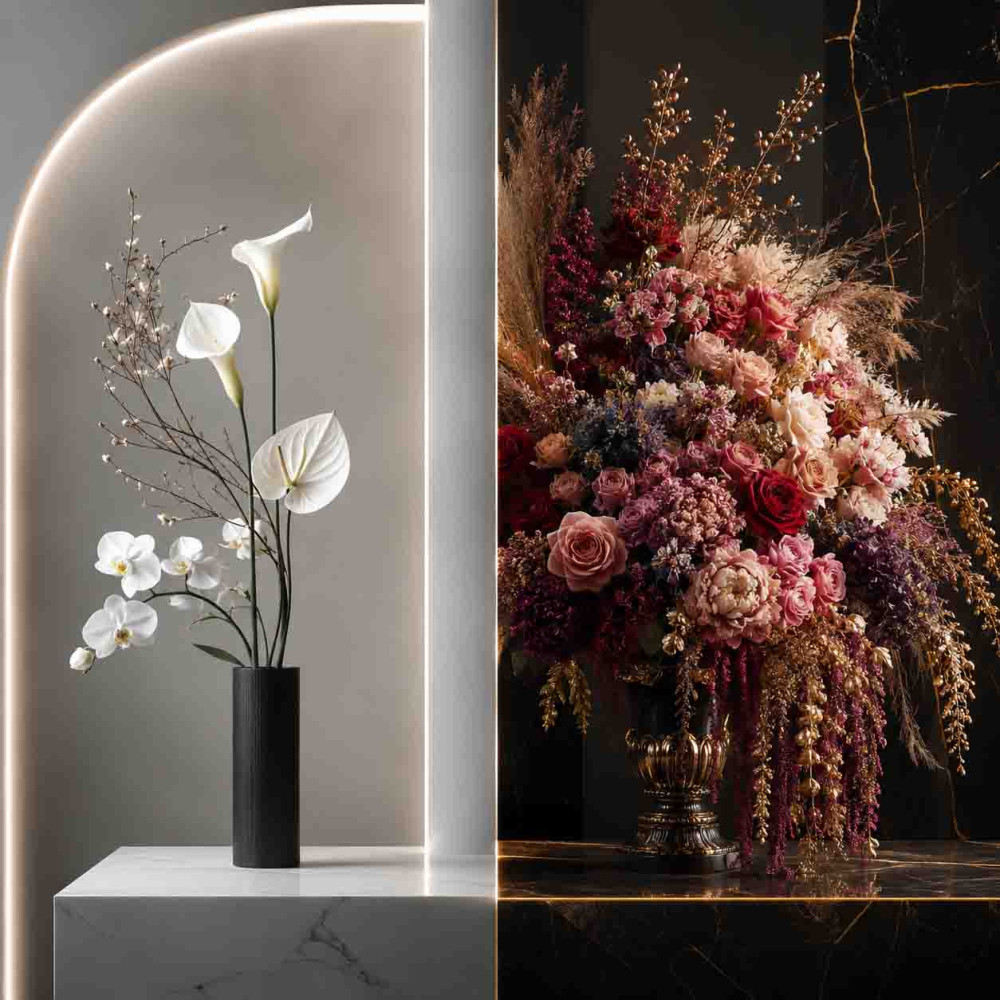
Minimalism vs. “Luxury Excess”: What Is Considered Premium in Floristry Today
Introduction: How the Perception of Premium Has Changed in the Floral Industry
For many years, the concept of a premium bouquet in the floral industry was directly associated with quantity, density, and visual complexity. The more flowers, the fuller the arrangement, and the more decorative elements involved, the higher the perceived value. This logic shaped the market for decades: an expensive bouquet was expected to look “luxurious,” demonstrating volume, excess, and visual abundance. However, by 2026, this model is rapidly losing effectiveness. Florists are increasingly facing situations where visually overloaded arrangements are no longer perceived as premium, but instead appear outdated, chaotic, or visually noisy.
At the same time, the opposite trend is gaining strength. More restrained, clean, and structured bouquets are increasingly perceived as more expensive and more professional, despite containing fewer elements. This is not simply a change in taste — it is a shift in perception itself. Customers no longer evaluate a bouquet solely by the number of flowers. They respond to shape, balance, composition clarity, and confidence in execution. As a result, premium floristry is no longer about “more”; it is about precision. This shift now defines which bouquets sell at higher prices, which ones build strong brands, and which ones retain customers.
Why “Luxury Excess” Is No Longer a Premium Signal
The “luxury excess” approach is built on abundance. It assumes that value can be demonstrated through quantity: more flowers, more shades, more textures, and more decorative elements. Visually, this creates a rich and saturated composition that was once associated with high status. However, in today’s market, this approach increasingly produces the opposite effect because excess no longer communicates value — it communicates a lack of selection and control.
When a bouquet contains too many elements, the eye cannot focus. The composition loses its center, hierarchy disappears, and the arrangement begins to feel chaotic. Even expensive flowers stop standing out as individual elements because they dissolve into the overall visual mass. As a result, the customer no longer understands what exactly they are paying for. This is the key issue: premium products must feel clear and intentional, while overloaded compositions destroy that clarity.
Another issue is standardization. Bouquets created in the “luxury excess” style are often assembled according to similar principles, making them visually interchangeable. This reduces the sense of uniqueness and, consequently, perceived value. In an environment where customers consume large amounts of visual content every day, generic abundance no longer works as a premium signal. It becomes background noise.
Minimalism as the Language of Modern Premium Floristry
Minimalism in floristry is not about reduction — it is about concentration. It is the ability to create a strong visual and emotional impact through carefully selected elements and a well-constructed structure. In minimalism, nothing is unnecessary, but this does not mean there is “less.” It means that every element serves a purpose and occupies its rightful place within the composition.
The key difference between minimalism and visually dense arrangements lies in attention control. A minimalist bouquet always has a focal point, a clear visual direction, and a balance between elements and negative space. This creates a sense of clarity directly connected to premium perception. The customer is not overloaded with information; the composition is easy to read and feels intentional.
Importantly, minimalism requires greater precision than “luxury excess.” In overloaded arrangements, mistakes can be hidden behind quantity. In minimalist compositions, every mistake becomes visible. This makes minimalism far more demanding in terms of skill, while simultaneously increasing its perceived value in the customer’s eyes — even if they cannot consciously explain why.
Why Minimalism Sells at Higher Prices Despite Smaller Volume
From an economic perspective, minimalism appears paradoxical: fewer flowers, higher price. Yet from a perception standpoint, the logic is clear. Customers are not paying for quantity; they are paying for the feeling of quality and confidence. A minimalist bouquet looks like the result of intentional selection rather than an attempt to “add more.”
The first factor is readability. When a composition is visually clear, customers make decisions faster. They do not analyze — they immediately perceive. This increases conversion rates. The second factor is association. Minimalism is connected to modern design, architecture, and premium branding. These associations automatically transfer to the bouquet itself. The third factor is trust. When a florist avoids visual overload, it signals confidence in the product rather than an attempt to persuade through excessive decoration.
As a result, minimalism allows florists to operate with higher margins. It reduces dependence on sheer volume and shifts value toward execution quality. This makes it a more sustainable model, especially in the premium and upper mid-market segments.
Where the Line Between Minimalism and Emptiness Lies
One of the market’s biggest mistakes is reducing minimalism to simply “using fewer flowers.” This leads to weak compositions that lack structure and fail to hold attention. Such bouquets are perceived as unfinished rather than premium. This damages the reputation of minimalism itself and creates the false impression that “minimalism does not sell.”
The difference between minimalism and emptiness lies in structure. Minimalism contains a clear compositional logic: balance, rhythm, depth, and emphasis. Even with a small number of elements, the bouquet feels complete. Emptiness lacks this logic. Elements exist separately rather than forming a unified visual object.
This is why minimalism requires a higher level of expertise. It is not about reduction — it is about control. Without that control, minimalism turns into cost-cutting disguised as style.
How Customer Behavior Changed in 2026
Modern customers have become significantly more visually sensitive. Every day they interact with design, architecture, fashion, and branding, all of which shape their expectations. Even if they cannot verbally explain the difference between styles, they intuitively recognize when a product feels contemporary and when it does not.
This is especially visible in decision speed. Minimalist, structured bouquets are easier and faster to process visually. Overloaded arrangements require more time and often create hesitation. This directly affects sales, particularly in online environments where purchasing decisions are made within seconds.
At the same time, expectations of premium have changed. Customers no longer want something that is simply “expensive.” They want something that feels intentionally expensive. They are searching for products that appear confident and modern rather than merely dense or excessive. This shift is making minimalism increasingly desirable.
Why Florists Continue Creating “Luxury Excess” Arrangements
Despite these changes, many florists continue working within the old logic. The reason is inertia and predictability. The “luxury excess” approach feels familiar, easier to scale, and capable of delivering fast visual results. Minimalism demands more control and skill, while mistakes become immediately visible.
Another important factor is fear of customer reaction. Florists worry that “less” will not be perceived as “expensive.” This often leads to unnecessary complexity and overload, even when it damages the composition.
As a result, the market is currently in a transitional phase: customer demand has already changed, while the market supply is still catching up.
What This Means for Business: Strategy Rather Than Style
The choice between minimalism and “luxury excess” is not simply an aesthetic preference — it is a strategic business decision. It defines positioning, target audience, and financial structure. Minimalism enables brands to become more sustainable because it is built on quality rather than volume. It reduces dependence on material costs while increasing the importance of expertise.
This does not mean that rich, abundant arrangements should disappear completely. It means they must become intentional and structurally balanced. Even a visually rich bouquet can feel premium if it has compositional logic. The problem is not quantity itself, but the absence of structure.
Conclusion: Premium Is About Control, Not Excess
The key conclusion is that premium floristry is no longer defined by quantity. It is defined by control of form, precision, and confidence. Minimalism has become the clearest expression of this new logic because it does not hide quality — it reveals it. In 2026, the winners are those who know how to guide customer attention through structure rather than visual overload. This is what allows brands to charge higher prices, retain customers, and build long-term positioning.
Your experience matters! Take a short survey and see what answers other flower business representatives gave. Take part