Latest Blog Posts


Aug 17
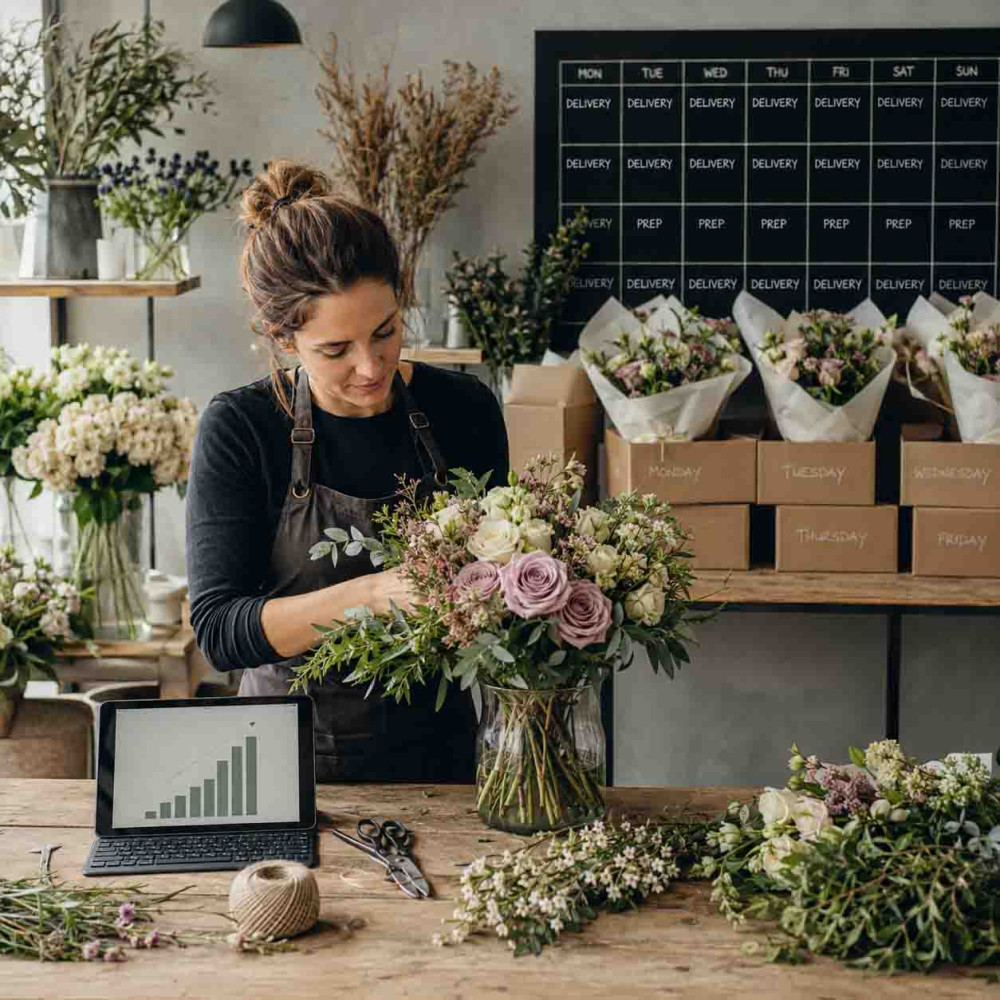
Flowers as a Subscription: Can the Recurring Revenue Model Work in Floristry and How Is It Changing Business Economics in 2026?
Introduction: Why the Flower Market Is Hitting a Ceiling and Looking for Recurring Revenue
For decades, the flower business has developed around event-driven demand, where every sale is closely tied to a specific occasion: a holiday, a date, a gesture of attention, or a corporate event. This model has created a stable yet highly volatile business economy. Revenue is concentrated around peak periods, with significant downturns in between, while customer behavior remains unpredictable. Even with strong traffic and a good assortment, businesses are forced to constantly “start over” because one sale does not guarantee the next.
In 2026, this limitation is becoming particularly noticeable. Growing competition, rising customer acquisition costs, and market saturation mean that the traditional model is becoming less capable of delivering sustainable growth. Businesses increasingly face a situation in which increasing turnover requires disproportionately large investments in marketing and operations. At this point, interest in the subscription model emerges as a way to change the very structure of revenue.
Subscriptions promise what floristry often lacks: regularity, predictability, and a cumulative effect. However, the key question is not whether a subscription can technically be implemented, but whether it can become a natural part of the category. Flowers are not an everyday necessity, and regular flower consumption requires customers to rethink their habits. This is where the line lies between a model that works on paper and one that can actually scale.
Subscription as a Paradigm Shift: From Occasions to Continuous Presence
To understand the potential of subscriptions, it is necessary to move beyond the traditional perception of flowers as a gift. A subscription model changes not simply the frequency of purchase, but the meaning of the purchase itself. Flowers stop being a response to an occasion and become part of the environment in which the customer lives or works. This is a fundamental shift because it moves the product from the “occasion-based” category into the “default” category.
This transition requires a change in the entire product logic. A bouquet can no longer be designed solely for immediate visual impact. It needs to remain appropriate over time, avoid becoming visually tiring, complement the surrounding space, and still create a sense of renewal. This means that the traditional idea that “bigger and brighter is better” becomes less relevant. Structure, balance, longevity, and the ability of an arrangement to “live” naturally within an interior become increasingly important.
At the same time, the role of the customer changes. Instead of choosing a specific bouquet, the customer begins to trust the system. This requires a high level of trust in the brand because the purchasing decision becomes less directly controlled by the customer. In this model, the business is no longer selling a single product unit — it is selling an ongoing process in which the customer participates.
Why the Traditional Model Does Not Scale: The Hidden Cost of Transactions
The transactional model of the flower business involves hidden costs that are often underestimated. Every sale requires a complete cycle: customer acquisition, conversion, order fulfillment, and communication. Even if a customer returns, there is no guarantee that they will do so regularly. As a result, the business repeatedly pays for the same activities.
This leads to higher acquisition costs and lower marketing efficiency. The customer base does not accumulate value because interactions remain fragmented. Even with high turnover, profitability can remain unstable because demand is distributed unevenly.
A subscription changes this dynamic. It transforms isolated transactions into a continuous revenue stream in which customer value develops over time. This reduces pressure on acquisition and allows the business to treat retention as a key growth mechanism. However, the cost of failure also increases. If a customer leaves, the company does not lose just one sale — it loses the entire future revenue stream associated with that customer.
Subscription Economics: How Key Business Metrics Change
Introducing a subscription model affects fundamental business metrics. First of all, LTV — customer lifetime value — increases. A single customer begins generating revenue over an extended period, allowing the company to redistribute marketing spending and invest in higher-quality customer acquisition.
CAC — customer acquisition cost — decreases in relative terms because it is spread across a larger number of transactions. This makes the business more resilient to rising advertising costs. However, absolute CAC may even increase if the company starts targeting higher-quality customer segments.
Margins also change. With a stable order volume, the business gains opportunities to optimize purchasing, reduce waste, and build more efficient logistics. This creates economies of scale that are difficult to achieve within a purely transactional model.
Churn becomes one of the most important indicators. It ultimately determines whether the model works. High churn undermines subscription economics because customer acquisition costs cannot be recovered over a sufficiently long period. As a result, retention becomes a central element of the strategy.
The Main Barrier: Why Customers Do Not See Flowers as a Regular Purchase Category
Despite its economic advantages, the subscription model faces a fundamental barrier: perception. Flowers are not part of the basic consumer basket. They are not naturally associated with regular consumption, and customers are generally not accustomed to planning flower purchases in advance.
There is also an element of uncertainty. A subscription involves giving up some degree of control because customers may not know exactly which bouquet they will receive. In a category where visual perception plays a central role, this can become a serious limitation.
A third barrier is the lack of obvious value. If a subscription simply offers the same bouquets as one-time purchases but on a fixed schedule, it does not create any additional meaning. Customers see little reason to change their behavior.
Therefore, the core challenge of a flower subscription is not necessarily pricing or logistics. It is the fact that the model does not naturally fit the way customers currently perceive the product.
Where Subscriptions Already Work: Real Growth Opportunities
Despite these limitations, there are segments in which the subscription model can deliver sustainable results. The corporate sector is one of the clearest examples. In this context, flowers serve as part of the visual environment, making regular delivery logical. A subscription simplifies management, reduces operational costs, and ensures consistency.
The second segment consists of private customers who place a high value on the aesthetics of their environment. These customers perceive flowers as part of their lifestyle. For them, a subscription becomes a way to maintain a certain level of visual comfort.
In both cases, the key factor is not price but value. A subscription works when it solves problems related to convenience and quality rather than simply offering savings.
How to Build a Model That Works: From Product to Service System
A successful subscription requires a transition from selling bouquets to creating a complete system. The product becomes part of a broader structure that includes service, communication, and customer experience.
Variety is one of the most important elements. Customers should not receive repetitive arrangements. Each delivery needs to feel different while still maintaining a recognizable style. This creates a sense of renewal without sacrificing identity.
Personalization also plays a critical role. Allowing customers to choose parameters such as frequency, color palette, and size gives them greater control and reduces the likelihood of cancellation.
Communication becomes a tool for creating value. Explaining the concept, seasonality, and the reasoning behind each selection strengthens the customer’s perception of the service and reduces uncertainty.
As a result, a subscription evolves into a system in which the physical product is only one of several elements.
Operational Risks: Where the Subscription Model Loses Money and Breaks Down in Practice
A subscription amplifies not only a business’s strengths but also its weaknesses, turning isolated mistakes into systemic losses. In a transactional model, a single failure may go largely unnoticed because the customer may not return anyway. In a subscription model, every mistake accumulates and directly affects retention — and therefore the entire economic model. This makes operational stability not merely important, but critical.
The first and most sensitive risk is inconsistent quality. A subscription creates an expectation of a predictable standard, and any deviation can be perceived as a breach of that expectation. If a customer receives a bouquet that looks noticeably weaker than the previous one, trust may decline even if the product is technically still “acceptable.” In this model, quality is not evaluated in isolation but over time. That is why the standard of “good enough” stops working — the business needs to maintain a consistently high level or demonstrate gradual improvement.
The second risk is logistics. Regular deliveries require a high degree of accuracy and coordination. Even minor delays or delivery disruptions can start to feel like a systemic problem because they may occur repeatedly. This is especially critical in the corporate segment, where flowers are part of the physical environment and any inconsistency becomes immediately noticeable. As a result, logistics is no longer simply an operational function — it becomes part of the product itself.
The third risk is a mismatch between expectations and reality. If customers do not fully understand what they will receive as part of the subscription, a gap emerges between expectations and actual experience. This may relate to visual style, arrangement size, or replacement frequency. Unlike a one-time purchase, there is effectively no “second chance” because the customer evaluates the service as a whole. Lack of transparency or insufficient communication directly increases churn.
There is also a scaling risk. A model that works with a limited number of customers may fail under growth if processes have not been standardized. Increasing volume without a properly structured system leads to declining quality, which can trigger a chain reaction of cancellations. In this sense, a subscription business needs to build a resilient operational foundation first and scale only afterward.
Therefore, the primary risk is not demand but execution. The quality of execution ultimately determines whether a subscription becomes a source of stable recurring revenue or a source of losses.
How the Market Is Changing in 2026: Subscription as an Additional Layer, Not a Replacement
By 2026, it is becoming clear that subscriptions are not replacing traditional floristry but are creating an additional layer of the market with its own logic. Attempts to treat subscriptions as a universal replacement can lead to mistakes because different customer segments continue to demonstrate different patterns of behavior. Some customers continue to buy flowers for specific occasions, while others move toward regular consumption, and these groups do not fully overlap.
This is creating a hybrid structure in which businesses need to operate with several formats at the same time. The transactional model remains the foundation of the mass market, where accessibility and speed are particularly important. The subscription model develops primarily in segments where convenience, consistency, and the visual environment matter more. Between these two models is an intermediate group of customers who may combine both approaches depending on the situation.
This market segmentation also changes the nature of competition. Companies begin competing not only through their products but also through their models of interaction with customers. A subscription becomes more than an additional service; it becomes a positioning tool. A brand that offers a high-quality subscription service may be perceived as more systematic and reliable, strengthening customer trust.
At the same time, visual and service differentiation becomes increasingly important. In a transactional model, businesses can compete through assortment and price. In a subscription model, competition is based more heavily on experience and consistency. This requires a different level of management and a different approach to the product.
The market therefore does not become simpler — it becomes more multilayered. The ability to operate effectively within this complexity is what increasingly determines business resilience.
Conclusion: Subscription as a Shift from Selling Products to Managing Customer Experience
The most important change that the subscription model brings to floristry is the shift in focus from the product itself to the overall customer experience. The business stops selling individual bouquets and begins managing a long-term relationship with the customer. This means that value is no longer created only at the moment of sale but throughout the entire subscription period.
Within this model, the companies that succeed are those capable of building a system in which every element — from purchasing and delivery to communication — works in coordination. A subscription requires not only a strong product but also a high level of organization. It exposes and amplifies weaknesses, but at the same time it creates an opportunity to build a sustainable revenue model that is less dependent on unpredictable factors.
Moving toward a subscription model is not a tactical decision but a strategic choice. It requires businesses to reconsider the role of floristry itself: moving from craftsmanship and retail toward service and experience management. Flowers stop being simply a product and become part of the environment that the business helps create and maintain.
In 2026, this is becoming an important dividing line. Companies that continue to operate exclusively within a transactional model remain dependent on fluctuations in demand. Companies that learn to develop subscriptions as a complete system gain the opportunity to build a more predictable, scalable, and resilient business.
That is why subscription is not simply a sales format. It represents a change in the role of floristry within the market and a transition toward a new economic model in which value is created not at a single moment, but over time.
Your experience matters! Take a short survey and see what answers other flower business representatives gave. Take part