Introduction: Why “Freshness” Is a Myth, Not a Fact
In the floral industry, the concept of freshness has traditionally been perceived as something obvious and absolute. A flower is either fresh or it is not. This is often associated with the cutting date, delivery timelines, or the visual condition displayed in-store. However, in the reality of 2026, it is becoming increasingly clear that freshness is not a characteristic, but the result of a complex chain of processes in which a flower gradually loses its resource long before it reaches the customer. And it is precisely this mismatch between perception and reality that has become one of the industry’s key problems.
A flower does not begin “living” at the moment of sale. It begins aging from the moment it is cut, and every stage of logistics either slows this process down or accelerates it. By the time a customer purchases it, the flower has already gone through a significant part of its life cycle, and it is the remaining resource that determines how long it will last in a vase. At the same time, a flower may look visually perfect, creating an illusion of freshness that has no direct connection to its actual condition. This is the market’s main deception: what is being sold is a promise based on appearance rather than actual remaining life.
Potential and Remaining Resource: How a Flower’s “Life” Is Really Measured
To understand how long a flower truly lives, it is necessary to abandon the idea of a fixed lifespan and move toward a resource-based model. Every flower has a potential — the maximum amount of time it can survive under ideal conditions. But this potential begins to decline immediately after cutting. From that moment, the flower becomes a system consuming stored resources: moisture, sugars, and cellular energy. This process cannot be stopped; it can only be slowed down.
Every stage of the supply chain affects the speed of this consumption. If conditions remain stable and controlled, the resource is preserved. If deviations occur, it begins to decrease more rapidly. As a result, by the time of sale, a flower may retain either 80% of its original potential or only 30% — and these are fundamentally different products despite having the same appearance. It is this remaining resource that determines the actual lifespan for the customer, yet the market rarely operates with this concept, continuing instead to sell theoretical potential.
The First Hours After Cutting: The Moment Future Quality Is Formed
The most critical stage in a flower’s life is the first few hours after cutting. At this point, it loses access to water and nutrients, and its physiology changes dramatically. If rapid cooling and water balance restoration are provided during this period, the flower retains a significant portion of its resource. If delays occur, accelerated moisture evaporation and sugar consumption begin, leading to irreversible changes.
The key issue is that the consequences of this stage do not appear immediately. A flower may look perfectly normal, while its ability to retain moisture has already been reduced. This means it will absorb water less effectively, lose turgor faster, and deteriorate sooner. It is at this stage that the difference is created between a “long-lasting” flower and one that begins wilting after two days, even though visually they may appear identical at the start. This phase is rarely controlled across the entire supply chain, yet it forms the foundation of future quality.
Logistics: Where the Main Volume of Resource Is Lost
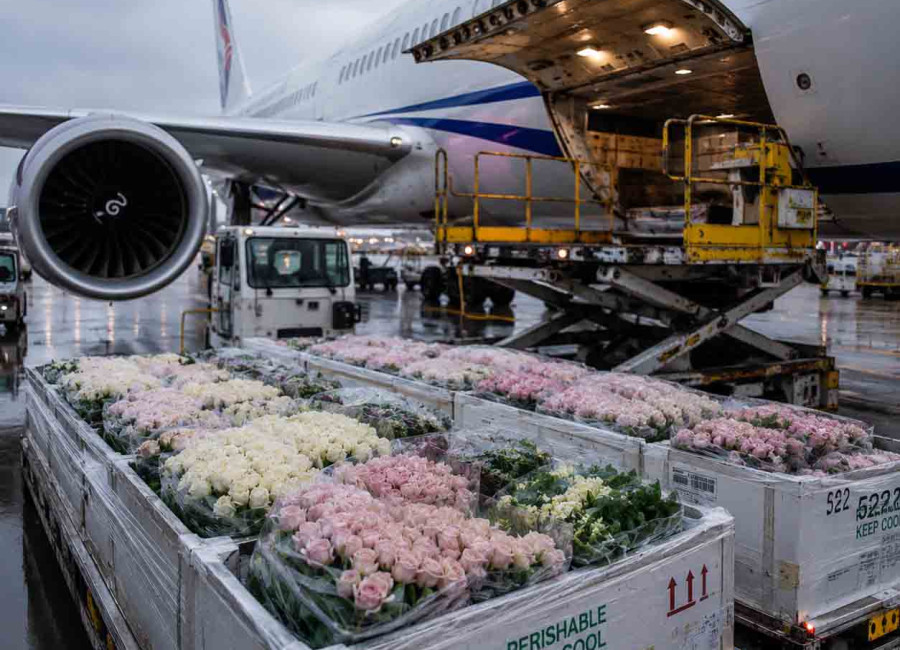
After primary processing, the flower enters the logistics system, which becomes the primary factor reducing its lifespan. The issue is not distance itself, but the nature of the conditions. A flower passes through numerous transitions: cooling, packaging, transportation, reloading, and storage. Every transition is an environmental change, and these changes create stress.
Temperature fluctuations are especially critical. A flower may remain in a cooled environment, then enter a warm area, and later be cooled again. These “heating–cooling” cycles accelerate physiological processes and speed up aging. Even short-term deviations matter because flowers react to extremes rather than averages. If several such episodes occur, their effects accumulate.
Mechanical factors also contribute: vibrations, pressure, and shifting during transport. These damage tissues and accelerate moisture loss. Such damage is rarely documented, yet it directly impacts lifespan. As a result, logistics becomes not merely a transportation stage, but a key “consumer” of the flower’s remaining resource.
Time Without Water: The Critical Factor That Is Ignored
One of the most destructive factors is the amount of time a flower spends without water. During this period, it loses moisture, and this process is difficult to reverse. Even short interruptions can partially block the flower’s vascular system, reducing its ability to absorb water effectively.
These periods occur at process intersections: during sorting, packaging, reloading, and transportation. They are rarely measured as a separate parameter, yet they can reduce lifespan by several days. The problem is that these losses are not immediately visible. A flower may still look normal while its recovery ability has already been compromised. As a result, it deteriorates more quickly for the customer, which is perceived as a quality issue rather than a logistics issue.
Warehousing and Distribution: The Invisible Zone of Degradation
After transportation, flowers enter distribution centers and warehouses, where they may remain longer than planned. Unloading queues, processing delays, and repeated handling all create additional stress episodes. This stage is often underestimated because it is considered “internal,” yet significant reductions in remaining resource may occur precisely here.
The main issue with warehouses is rhythm disruption. Flowers may stay outside optimal conditions longer than at other stages, and this is not always controlled. By this point, the flower has already gone through logistics and partially exhausted its resource. Additional stress becomes critical, and it is often here that the product’s final condition before retail is determined.
The Display Shelf: The Illusion of Freshness and the Actual Condition
On display, flowers look as attractive as possible. This is the point where the perception of freshness is created. However, this is also where the largest gap appears between visual condition and actual remaining resource. A flower may look perfect while already having a severely limited remaining lifespan.
Time becomes an additional factor. Flowers may stay on display for several days while continuously losing resource. Even with proper care, this process cannot be stopped. As a result, customers purchase a product that has already lived through a significant portion of its life without being aware of it. This creates expectations that do not match reality, becoming a major source of dissatisfaction.
Last-Mile Delivery: The Final Stage That Determines Everything
Delivery is the final stage that can either preserve the remaining resource or reduce it even further. Temperature fluctuations, lack of water, vibrations, and time all influence the flower’s condition. And it is at this stage that the customer receives the product.
The problem is that customers judge only the final result. They do not know what conditions the flower has gone through. If it quickly loses its appearance, this is perceived as poor quality. Thus, the entire supply chain is reduced to the final impression formed by the remaining resource.
Actual Lifespan: The Honest Picture of the Market
When comparing theoretical lifespan with actual lifespan, the gap becomes obvious. A flower that could last 7–10 days under ideal conditions often lasts only 3–5 days in reality. Under difficult conditions, even less. This is not accidental, but the result of the entire supply chain.
This gap is systemic. It is not caused by isolated mistakes, but formed at every stage. And that is exactly why it persists. Until the market begins accounting for actual remaining resource, this problem will continue.
The Economics of Lifespan: Where Businesses Lose Profit
Reduced lifespan directly affects economics. Flowers lose their marketable appearance more quickly, leading to markdowns and waste. Customer dissatisfaction increases, reducing repeat purchases. This impacts LTV and raises customer acquisition costs.
These losses are distributed and not always obvious, but together they become substantial. A business may operate with strong sales volumes while still losing profitability because it fails to manage product lifespan effectively.
Why the Market Does Not See the Problem
The main reason is the absence of a systemic approach. Losses are distributed throughout the entire supply chain, with no single point where they can be fully identified. An additional factor is delayed impact: the problem appears at the customer level rather than at the moment it occurs.
This makes losses effectively invisible and prevents proper analysis. As a result, businesses continue operating within a model that does not reflect reality.
What Is Changing: Lifespan as a Manageable Metric
In 2026, the approach is beginning to change. Businesses are starting to treat lifespan as a manageable parameter. This requires control across all stages and an understanding of where losses occur.
Flowers are no longer viewed simply as products, but as resources that can either be preserved or lost. This changes approaches to logistics, storage, and retail.
Conclusion: Flowers “Age” Before Reaching the Customer — And That Changes Everything
The main conclusion is that a flower does not begin living when it reaches the customer — it has already lived through part of its lifespan. And it is the remaining resource that determines its actual quality. In 2026, the winners are those who understand this logic and manage the entire supply chain rather than isolated stages of it. This is what allows businesses to reduce losses, improve quality, and build a sustainable operation.
Your experience matters! Take a short survey and see what answers other flower business representatives gave. Take part