Latest Blog Posts


Feb 20
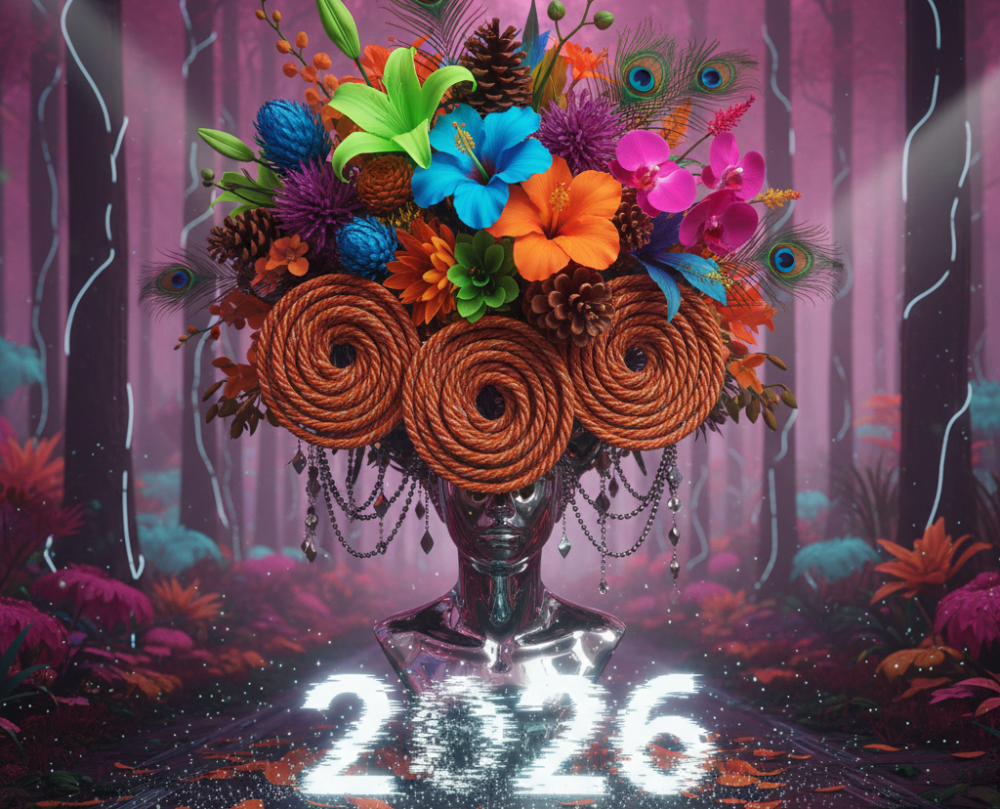
Which floristry trends won't survive 2026?
Floristry trends are emerging faster than they can become part of the profession. They are instantly picked up by social media, training courses, and showcases—and just as quickly fade away.
But it's not that there are more trends. The issue is which trends the market is no longer willing to support.
Floristry is gradually moving beyond the phase of visual experimentation for effect and into a phase of conscious design. This is precisely why some trends won't disappear suddenly—they'll simply stop working.
Trends that exist only for photos
One of the main signs of a "short-lived" trend is its dependence on the frame.
If a bouquet looks good only:
- from a certain angle,
- under the right lighting,
- against a neutral background,
but loses its expressiveness in real life, it doesn't hold up well from a distance.
Florists are the first to sense this: such bouquets are difficult to reproduce consistently, don't last long outside of photography, and rarely generate repeat requests from clients.
Hyper-complex forms as a demonstration, not a solution
Complex structures, unconventional frames, and visually overloaded compositions were long perceived as a sign of high quality.
But gradually, the market began to tire of designs that demand admiration, not dialogue.
Such trends don't survive for one reason: they speak about the florist, not the client.
When form begins to dominate meaning, a bouquet ceases to be a universal language of emotion and becomes a showpiece.
Mass trendiness without authorship
A trend dies most quickly when it loses its connection with its creator.
As soon as a visual technique becomes obligatory and is reproduced without interpretation, it ceases to be a sign of taste.
Florists see this in their clients' reactions:
- "It's the same everywhere,"
- "We've seen this before,"
- "We want something different, but we don't know what."
This is the moment when a trend stops selling, even if it's still considered "relevant."
Concepts that need to be explained
Floristry is an emotional environment.
Trends that require explanation, deciphering, or intellectual effort on the part of the client rarely become widespread and sustainable.
If the client doesn't immediately connect with the idea, they feel tension.
And tension is a poor ally for a purchase.
Such trends may exist in the art world or in competitions, but in real-world work, they quickly fade away.
Aggressive "fashionability" as a time stamp
There are trends that are too timeless.
They look "relevant here and now," but have almost no chance of lasting.
After a while, such bouquets begin to be associated not with aesthetics, but with a specific period.
And instead of a sense of taste, a feeling of obsolescence emerges.
Why these trends don't last
All of these trends have one thing in common: they leave no space for the client.
Form dictates how it should be perceived.
It doesn't allow for adaptation to the occasion, personality, or context.
And the market increasingly values flexibility over ostentation.
Which trends remain "alive"
Amidst the fading trends, it's clear what continues to work.
It's not necessarily "quiet" or "modest," but always meaningful.
Trends that last longer are those that:
- allow for variability,
- work with proportion rather than effect,
- are easily understood,
- can be adapted to different clients.
These are trends not of form, but of approach.
What florists need to understand right now
The question is no longer which trends to embrace.
The question is which ones should be ignored, even if they are popular.
Professional sustainability today is built not on the speed of copying, but on the ability to:
- distinguish visual noise from direction,
- sensing the point of form burnout,
- translating a trend into the language of a specific client.
Conclusion
Not all trends are meant to last—and that's okay.
But those that won't survive the coming years share superficiality, rigidity of form, and a lack of communication with the client.
Floristry is moving toward a more mature visual language.
And the winners are those who can see not only what's fashionable but also what's becoming less fashionable.
Your experience matters! Take a short survey and see what answers other flower business representatives gave. Take part