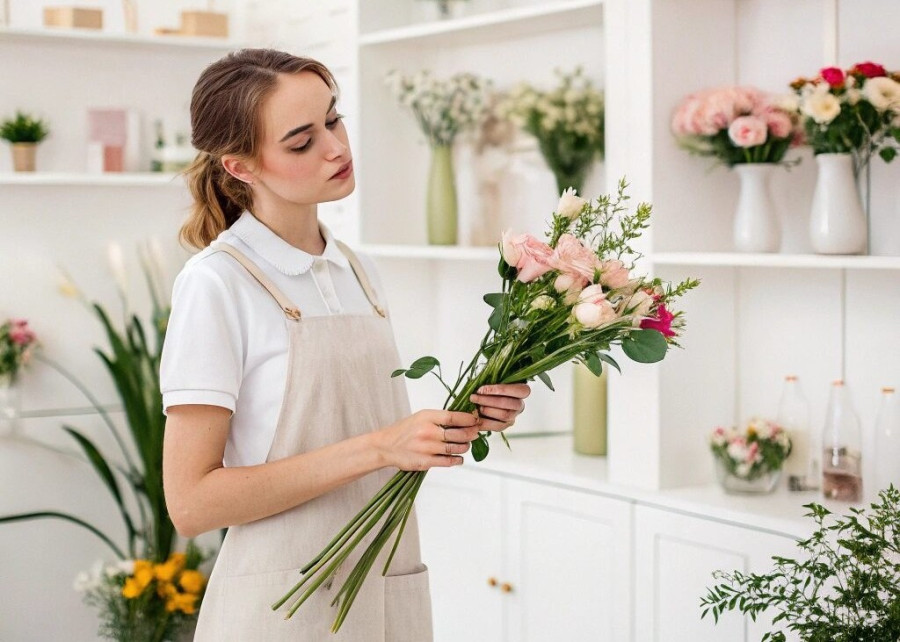
Floristry today is not only about choosing plants but also about creating an image, where style plays a key role. One bouquet might be composed of just three stems and look elegant, while another might consist of dozens of flower varieties and create a stunning effect. These two approaches reflect the main poles of modern floristry: minimalism and opulence.
Each style conveys its own philosophy and impacts the client differently. Minimalism speaks to simplicity and harmony, while opulence speaks to emotion and generosity. The choice of the florist or client shapes the perception of the bouquet and its meaning.
Why style is important
The style of a composition determines its character. The same arrangement of flowers can look completely different depending on how it's presented. For example, several calla lilies arranged in a simple vase create an image of elegance and restraint. However, if the same flowers are arranged in a lush, rounded bouquet, they will appear as a symbol of luxury and celebration.
It is style that allows a florist to stand out. It shapes the mood of the gift, reflects the giver's taste, and helps bouquets be remembered. Therefore, a modern florist works not only with plants but also with a visual concept, which determines the entire impression.
Minimalism: the power of simplicity
Minimalism in floristry is based on the principle of "less is more." It's not a paucity of form, but an emphasis on line, texture, and harmony.
Key features:
- a limited palette, often pastel or neutral;
- a small number of plant species;
- emphasized lines and shapes;
- attention to the vase and surrounding empty space.
What effect does it create:
- calmness and balance,
- a sense of sophistication,
- a feeling of thoughtfulness and "air".
When appropriate:
- for interior arrangements,
- in corporate gifts,
- in "less is more" wedding floristry.
Minimalism is chosen by those who appreciate aesthetics reminiscent of architecture and design. It highlights the gift-giver's taste and suits people who appreciate clarity and purity.
Pomp: energy and emotion
Lush bouquets are the opposite of minimalism. They offer a riot of color, volume, and a variety of shapes. This style grew out of the European tradition, where wealth and abundance were considered a sign of prosperity.
Key features:
- a variety of colors and textures,
- a rich, often contrasting palette,
- voluminous and rounded shapes,
- an emphasis on scale.
What effect does it create:
- a sense of celebration,
- delight and joy,
- a sense of generosity and "sweeping."
When appropriate:
- for anniversaries and major celebrations,
- as romantic gifts,
- in situations where a "wow" effect is needed.
Clients who value not only the result but also the moment of delivery choose opulence. Such a bouquet becomes an event, not just a gift.
Minimalism and flamboyance: two extremes of one profession
Minimalism and opulence are two different ways of expressing the same thing: the beauty of flowers.
- Minimalism is closer to design and philosophy: it is about harmony and subtlety.
- Opulence is closer to emotion and theatricality: it is about the power of impression.
Both styles are in demand and important. They don't compete, but rather complement each other, allowing florists to satisfy a variety of client requests—from "modest and stylish" to "rich and striking."
Trends
Today, the boundaries between minimalism and opulence are blurring. Florists are increasingly combining elements of both approaches:
- lush arrangements in a limited palette,
- minimalist bouquets with vibrant accents,
- experiments with form, where simplicity meets volume.
This is how new styles are born, reflecting the dynamics of modern floristry.
Conclusion
Minimalism and opulence aren't just two opposing approaches to creating bouquets, but two floristry philosophies that shape the perception of a gift and evoke different emotions.
Minimalism is the choice of those who value the aesthetics of clean lines, tranquility, and harmony. Such a bouquet rarely evokes intense emotions, but it works deeper: it helps highlight the gift-giver's taste and creates a sense of sophistication and modernity. Minimalism fits well into interiors, remains relevant regardless of fashion, and becomes part of an overall lifestyle concept.
Opulence, on the other hand, evokes emotion, energy, and generosity. These bouquets create a "wow" effect and often become the center of an event. They seem to say, "Look, this is a celebration, this is important." Opulence is closer to tradition, where the richness of the composition reflected attention to the recipient and the desire to impress.
For a florist, the ability to work with both styles is not just a matter of technique, but a way to reach different audiences and situations. The same client might order a minimalist bouquet for an office and a lush one for an anniversary. Therefore, the strength of the modern florist lies in flexibility: in the ability to listen to the client and transform their requests into a visual story that speaks for itself.
As a result, minimalism and opulence are not competing. They are the two languages spoken by modern floristry. And the more fluent a florist is in both, the greater their opportunity to create unique solutions, set trends, and retain clients.
Your experience matters! Take a short survey and see what answers other flower business representatives gave. Take part