Latest Blog Posts


Mar 02
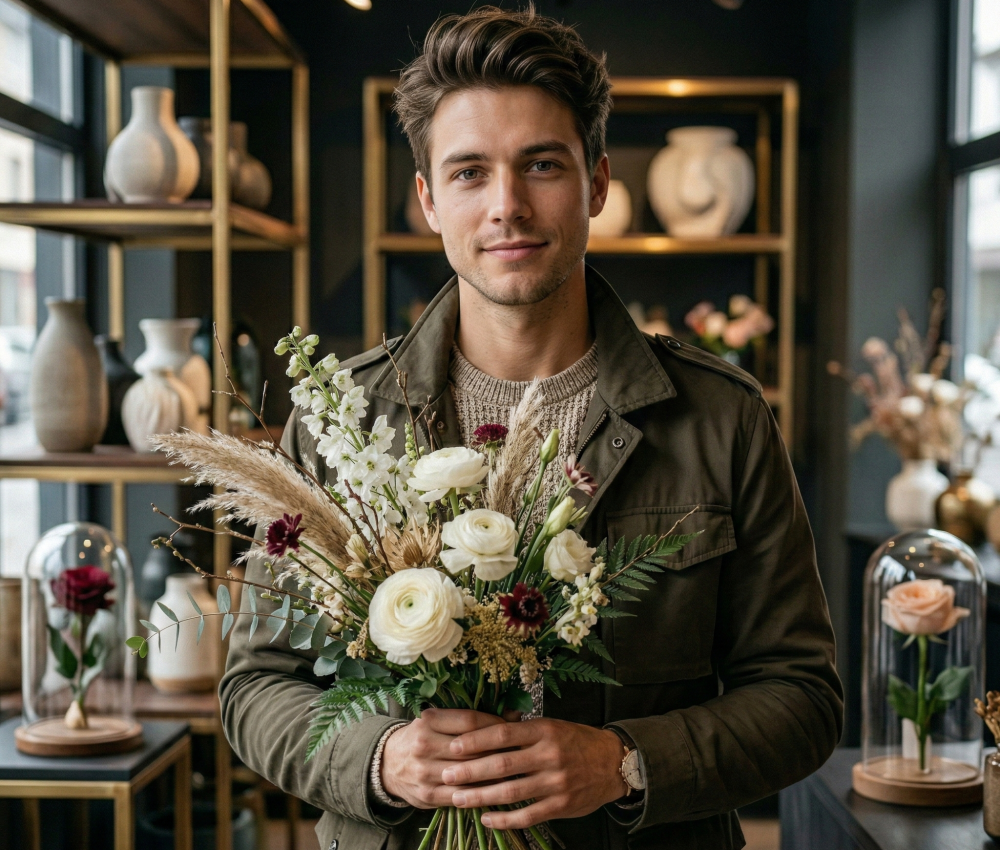
Why aesthetics are more important than status in new generations
Until recently, flowers were one of the most understandable and universal markers of status.
A large bouquet signified generosity. Rare flowers signified financial means. Elaborate packaging and ostentatious presentation signified a desire to impress. This code was legible and socially acceptable.
Today, it is rapidly losing its power.
New generations increasingly choose not what looks "expensive," but what resonates visually and emotionally with them. Aesthetics is gradually replacing status as the primary criterion of value.
How the very understanding of "value" has changed
For the young client, value is no longer measured by quantity, size, or rarity. It is increasingly measured by the feeling of making the right choice.
A bouquet is valuable if it:
- corresponds to one's inner state,
- does not conflict with one's lifestyle,
- looks natural in a specific context.
Value no longer screams—it is recognizable.
Why status symbols have ceased to impress
Status has ceased to be exclusive. What was once available to a select few has now become visually commonplace: identical "expensive" bouquets, repetitive shapes, and formulaic compositions.
Furthermore, status gestures are increasingly perceived as:
- ostentatious,
- insincere,
- not always appropriate.
For new generations, it's more important not to demonstrate capabilities, but to avoid falseness.
Aesthetics as a language of identity
Aesthetics has become a way to express oneself without words. Through the color, shape, and mood of a bouquet, a person conveys their taste, values, and outlook on life.
Such a bouquet doesn't say, "I can afford it," but rather, "This is me." And that's precisely what makes it meaningful.
A shift from demonstration to coincidence
If status is always a comparison ("higher," "more expensive," "bigger"), then aesthetics is a coincidence. It requires no external approval and has no hierarchy.
New generations choose bouquets that:
- don't clash with the interior,
- don't stand out from the visual environment,
- don't demand attention at any cost.
Flowers are becoming part of everyday aesthetics, not an event for the sake of an event.
Minimalism as a consequence, not a goal
Minimalism in floristry is often mistakenly associated with economy or simplification. In fact, it was a logical result of changing values.
Fewer elements – because each one should have meaning.
A restrained palette – because it lasts longer.
Simple form – because it doesn't conflict with the context.
This isn't a rejection of value, but a more rigorous selection.
Why a "quiet" bouquet evokes more emotion
Florists are increasingly noticing a paradox: bouquets without flashy accents evoke a deeper response.
Because:
- they are easier to accept,
- they are easier to identify with,
- they don't raise any doubts about whether it's appropriate.
The emotion becomes long-lasting rather than momentary.
How is this changing customer behavior?
New generations take longer to choose, but are less likely to hesitate after a purchase.
They ask less about "how much it costs," but are more interested in:
- the mood of the bouquet,
- the color combination,
- the feeling it creates.
This isn't a conversation about status, but about inner fulfillment.
What does this mean for florists?
Florists cease to be purveyors of "effect" and become purveyors of aesthetics.
It's important not to sell the most eye-catching bouquet, but to help the client find the one that's "theirs."
This requires:
- a fine sense of balance,
- the ability to listen,
- a rejection of universal status quo patterns.
The work becomes less ostentatious, but more profound.
Why status doesn't disappear, but changes form
It's important to understand: status hasn't disappeared completely. It's simply lost its cachet.
Today, status is:
- taste,
- restraint,
- a sense of proportion.
And aesthetics has become the means of expressing it.
What does this mean for the future of floristry?
Floristry is moving toward a more intimate, personal language. Flowers are ceasing to be an external statement and becoming part of a person's inner world.
Those who continue to speak only in the language of status are gradually losing touch with new audiences.
Those who work with aesthetics, consistency, and honesty gain trust and loyalty.
Conclusion
In new generations, aesthetics are more important than status because they are perceived as authentic. Flowers no longer have to prove themselves—they must resonate. Floristry is no longer about "impressing" but about "hitting the mark." And it is precisely in this shift that its new value lies.